Preschool activities
Preschool activities built for the child in front of you
Two-, three- and four-year-olds do not need harder worksheets. They need short, generous, colourful tasks they can finish — with their own name on them. That is what MamaPony prints.
What preschoolers actually need on the page
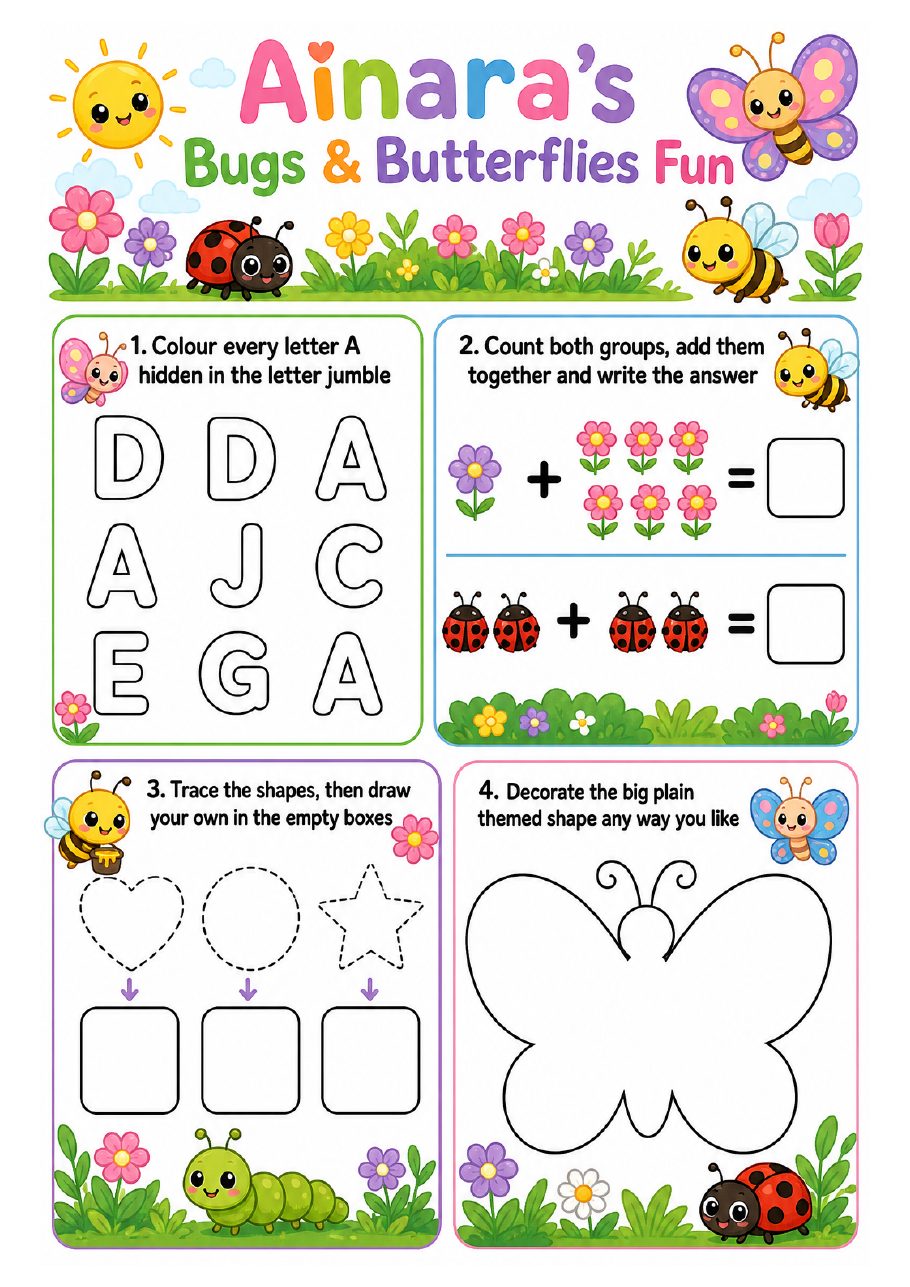
At two and three, a child is still learning that marks on paper mean something. So the pages are deliberately uncrowded: one instruction, big shapes, thick guide lines and lots of white space. There is nothing to read, because an adult reads it aloud.
By four and five, the same child can handle a first letter, a count up to ten, a simple pattern and a maze with two turns. MamaPony swaps the activity types as the age band changes rather than shrinking the same puzzle, so a 4–5 book genuinely looks different from a 2–3 book.
- Ages 2–3: chunky tracing, matching pairs, colour-in scenes, first counting to five.
- Ages 4–5: first letters and sounds, counting to ten, patterns, easy mazes, matching.
- One task per page, so nobody has to be told to keep going.
- Instructions in plain, short words a parent can read in one breath.
Their name and their favourite thing, on every page
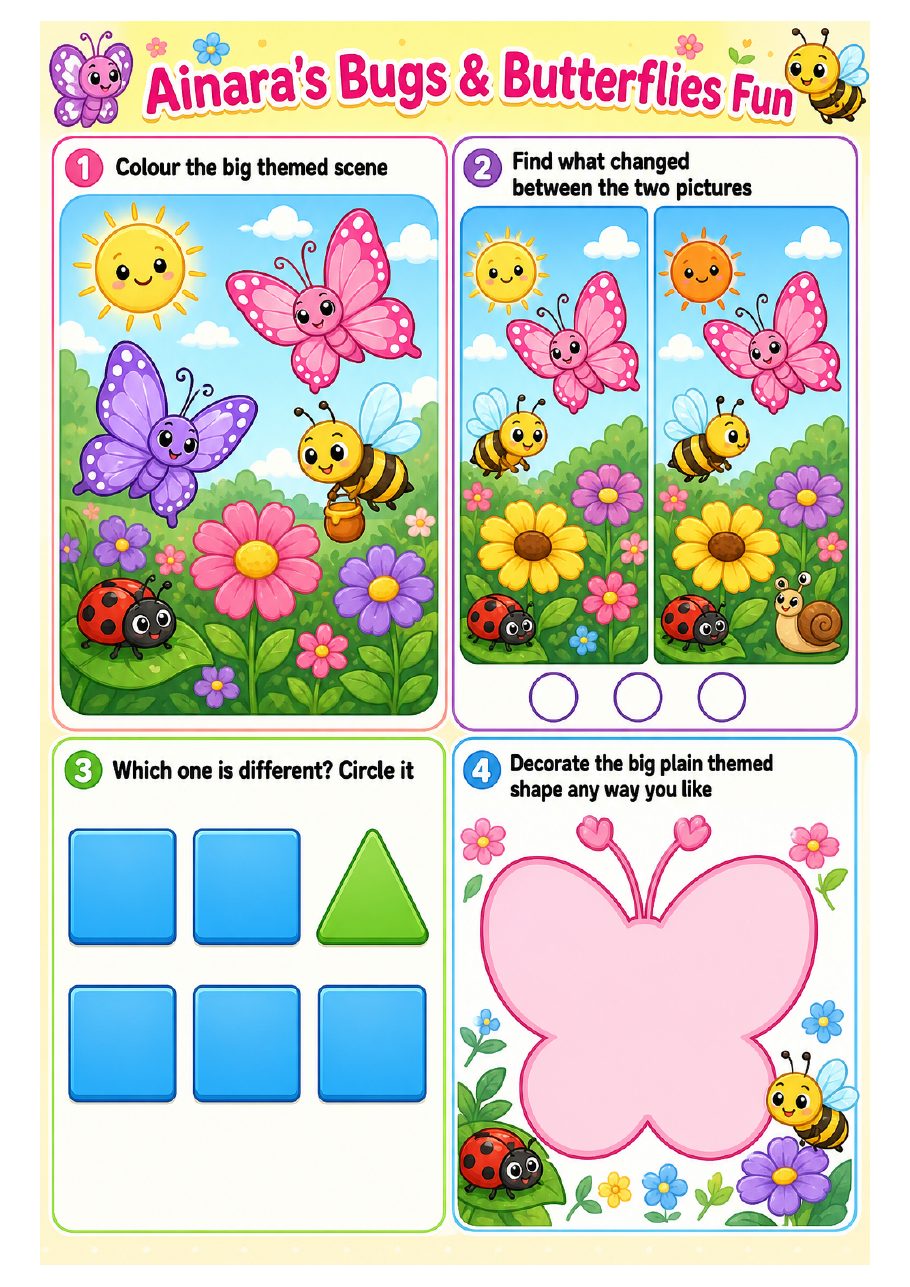
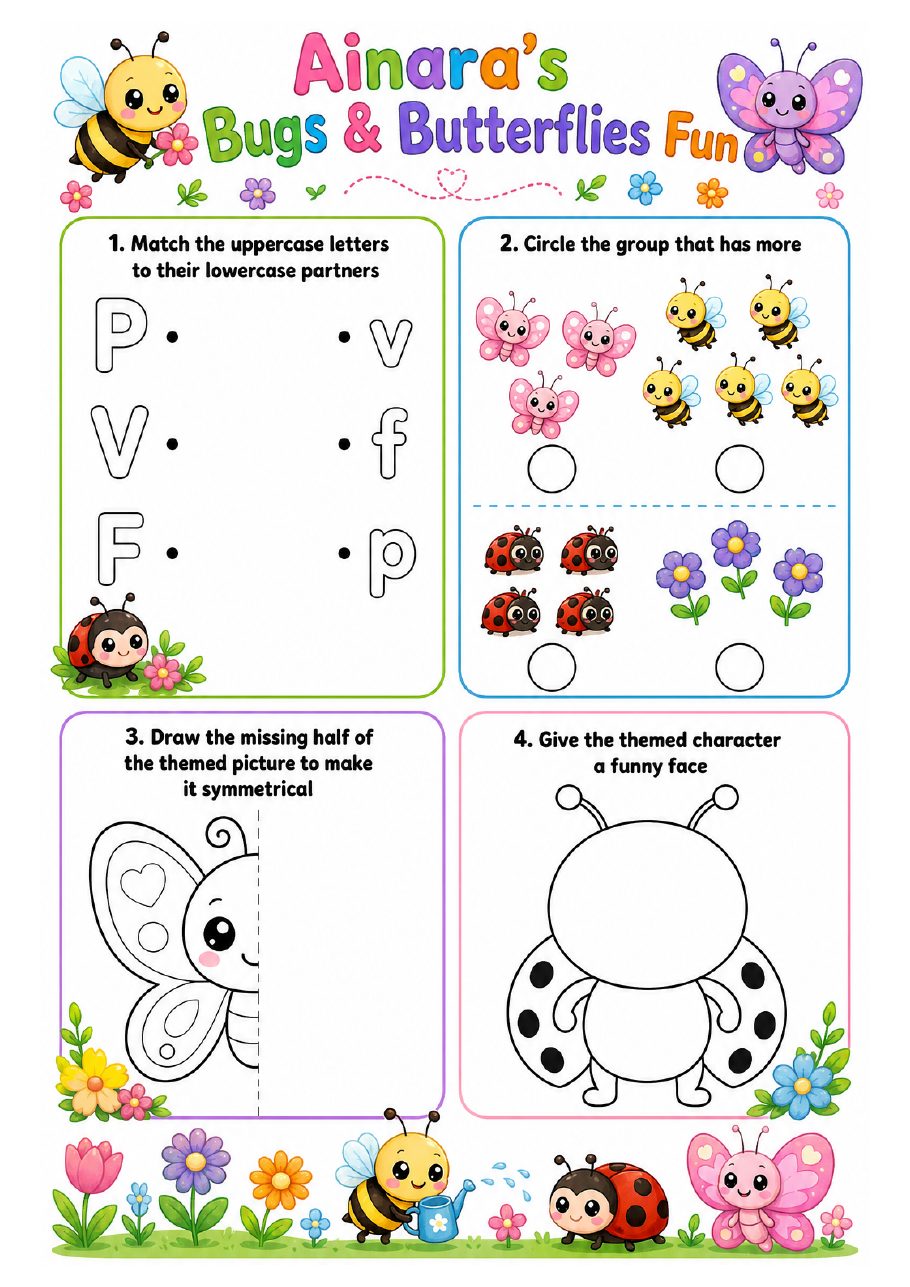
You give us a first name, an age band, a theme and a learning focus. A three-year-old who is currently obsessed with diggers gets diggers; a four-year-old deep in a dinosaur phase gets dinosaurs. Because the illustrations are drawn for that theme, the counting page counts the right things and the colouring page is a scene they actually want to colour.
The name matters more than it sounds. When the instruction says "help Maya find the butterfly", a preschooler treats it as a job rather than a worksheet, and will usually finish it without being asked twice.
Choosing a learning focus for this age
Balanced mix is the sensible default for a first book: a little language, a little counting, a little pencil work, a little colouring. If you know what you are working on, pick that instead and roughly three-quarters of the pages will follow it.
Pencil and hand skills is the most requested focus for this age, because tracing, path puzzles and cutting build the grip and control that writing needs later. Language and reading suits a child who is starting to recognise their initial letter, and numbers and thinking suits one who counts everything in the kitchen already.
Print, do, done
Each book is a 10-page print-ready PDF with 30+ activities and a certificate at the end. Print the whole thing for a rainy day or pull out two pages before dinner — there is no order you have to follow.
Plain paper and any home printer are fine. Crayons work better than felt tips at this age, and the tracing pages are drawn with wide strokes so a wobbly line still lands inside them.
Where to go next
- Approaching school? Our kindergarten worksheets cover early letters, sounds and number writing for ages 4–6.
- Prefer hands-on, self-correcting tasks? Try our Montessori-inspired activities for kids, including cut-and-place pages.
- Want the full picture of how personalisation works? Read about personalized activity books for kids.
Questions parents ask
A peek at real pages
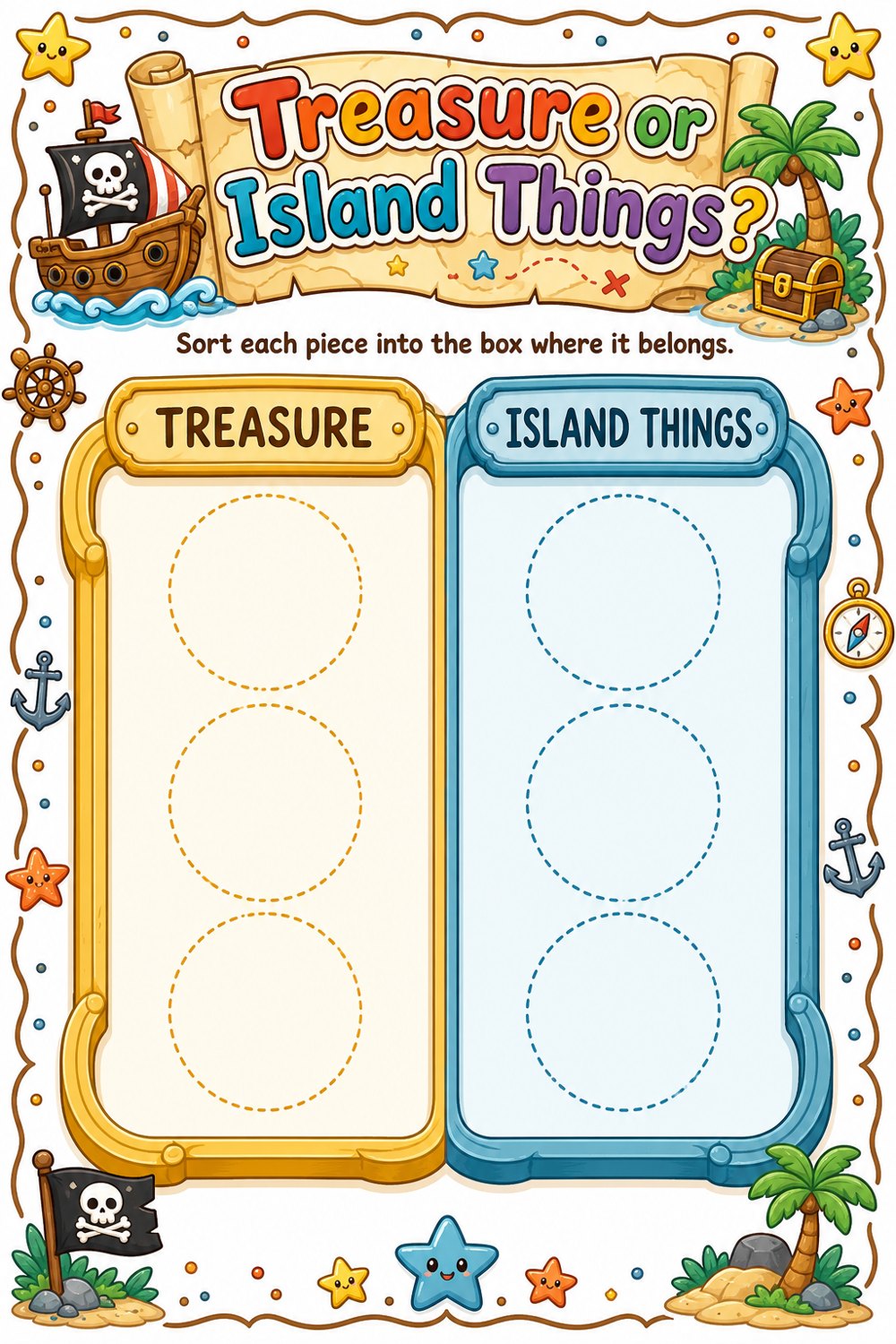
Make a preschool book they can finish
Choose their name, the 2–3 or 4–5 band, a theme they love and a focus. We will print the rest.