Kindergarten worksheets
Personalised kindergarten worksheets, not photocopies
Letters, sounds, counting and number writing — the kindergarten basics, printed inside a story about your own child instead of on a grey worksheet from a folder.
The skills a kindergarten year keeps circling back to
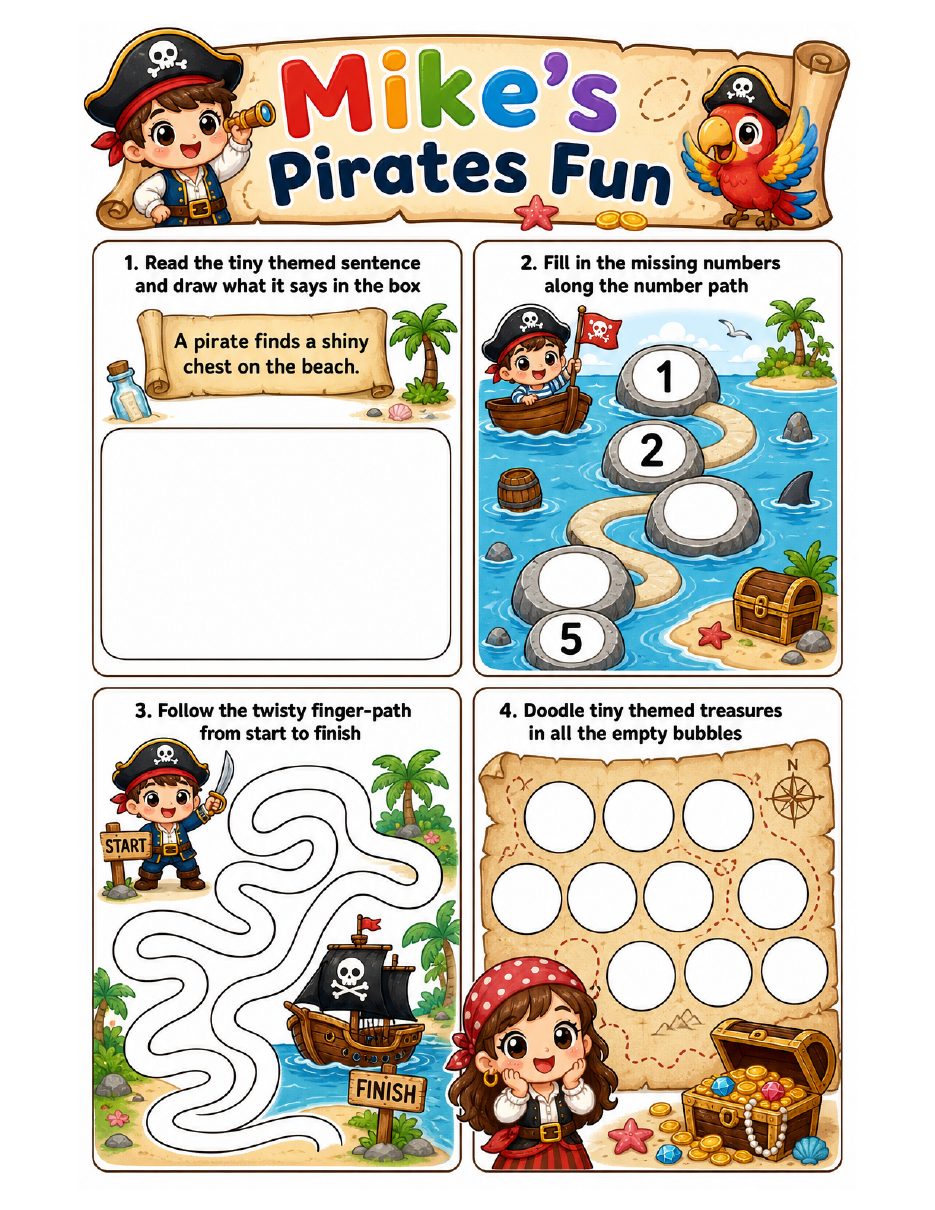
Between four and six, a child is working on a fairly short list: recognising and forming letters, hearing first and last sounds, counting reliably, writing digits the right way round, spotting patterns and holding a pencil comfortably for more than a minute. MamaPony builds books from that list rather than from whatever clip art was available.
Because each page is generated, the practice is specific. A number-writing page starts from a known count, so the picture, the count and the answer box always agree. A first-letter page names the exact picture and prints the exact dotted letter, so the instruction and the work match.
- Letter formation with centre-stroke guides and a starting dot.
- First-sound and word-picture matching using words a five-year-old knows.
- Count and write the number, with an empty box to fill in.
- Number tracing for the digits that suit the age band.
- Patterns, sorting and simple logic to warm up thinking.
Why personalisation helps at this stage
Handwriting practice is repetitive by nature, and repetition is where children opt out. When the page belongs to them — their name on the cover, their favourite theme in the illustration, their name inside the sentence — the same amount of practice stops feeling like a chore.
You choose four things: first name, age band (4–5 or 6–7 works best for kindergarten), a theme, and a learning focus. Choose language and reading for a letters-and-sounds heavy book, or numbers and thinking for counting and number writing. Balanced mix gives you a bit of each.
Checked before you print
Worksheets are only useful if they are correct. Every answer-bearing page in a MamaPony book is generated from deterministic content first — the count, the letter, the sequence, the sorting groups — and the artwork is then drawn to match it. Pages are reviewed automatically against that content, and anything that disagrees is redrawn.
That is why you should not find a counting page with five shells and no number five in the answer options, or a tracing page that arrives already written in. Those are the exact failures we test for.
How families use them
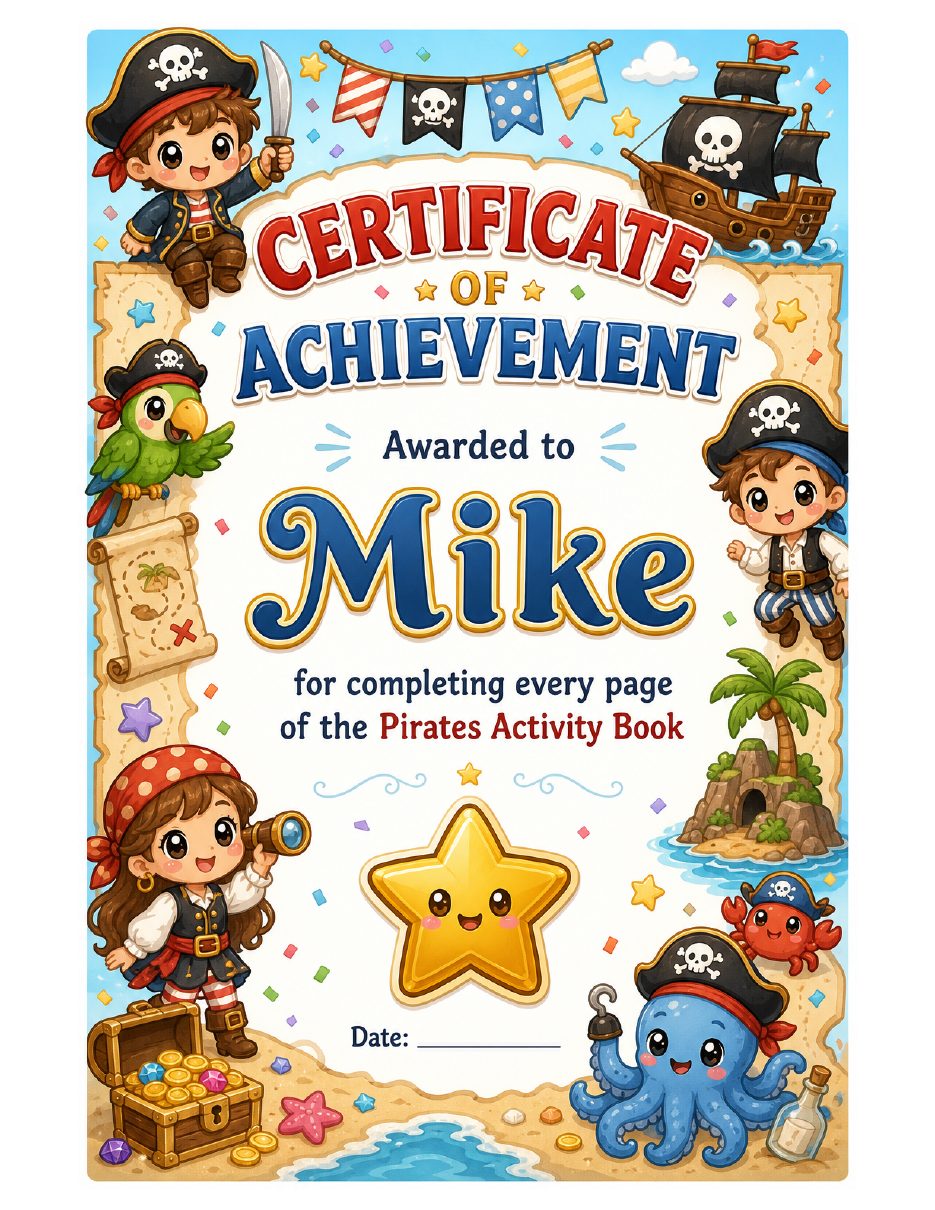
Most parents print two or three pages at a time: one letter page, one number page, one colouring page as the reward. Ten to fifteen minutes after school is plenty at this age, and the certificate at the end of the book gives the run an obvious finish line.
The PDF stays in your library, so you can reprint a page your child enjoyed, or the one that needs another go, without generating anything new.
Related pages worth a look
- Not quite school age yet? Start with preschool activities for ages 2–5.
- Teaching at home? See our personalised homeschool activities for weekly printable packs.
- Curious how the whole thing is built? Read about personalized activity books for kids.
Questions parents ask
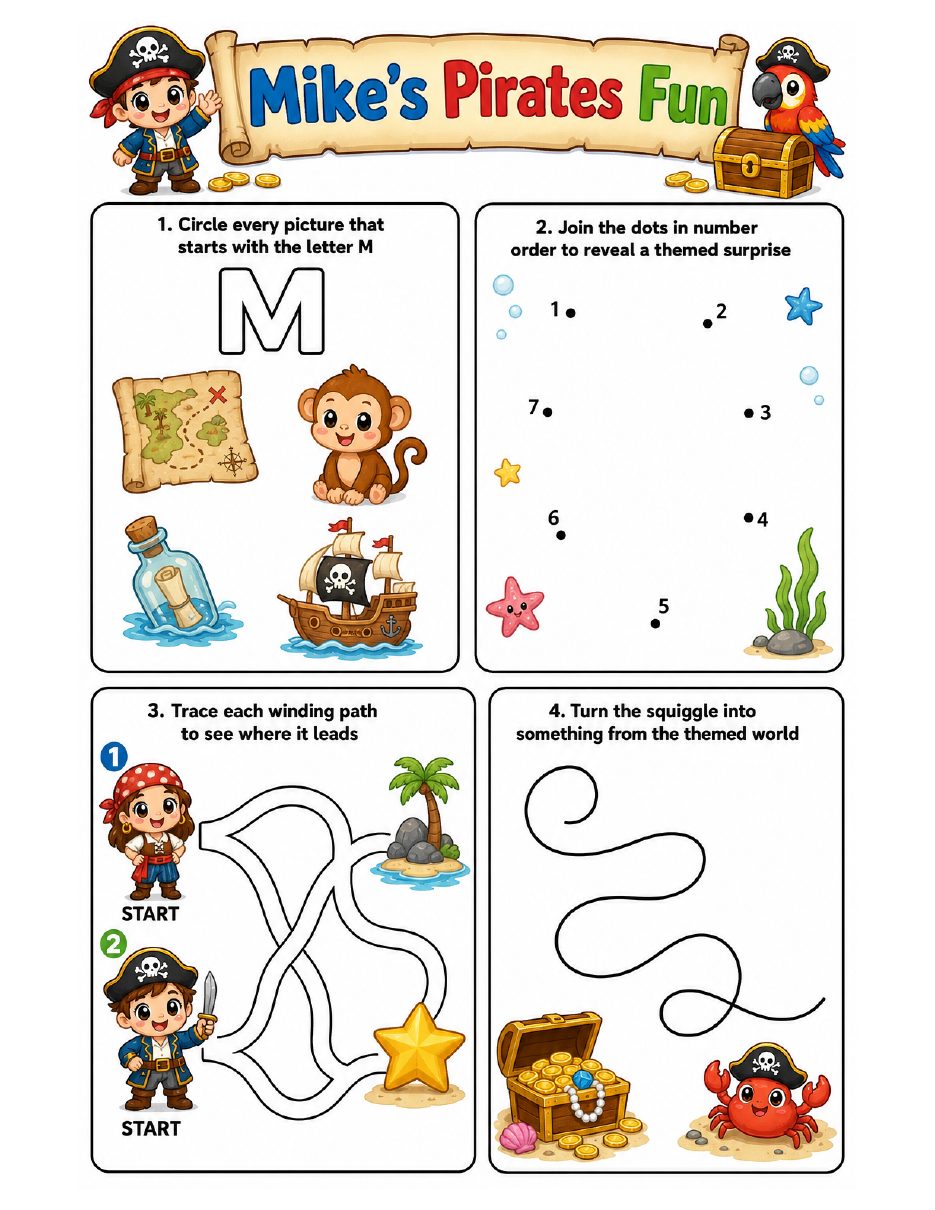
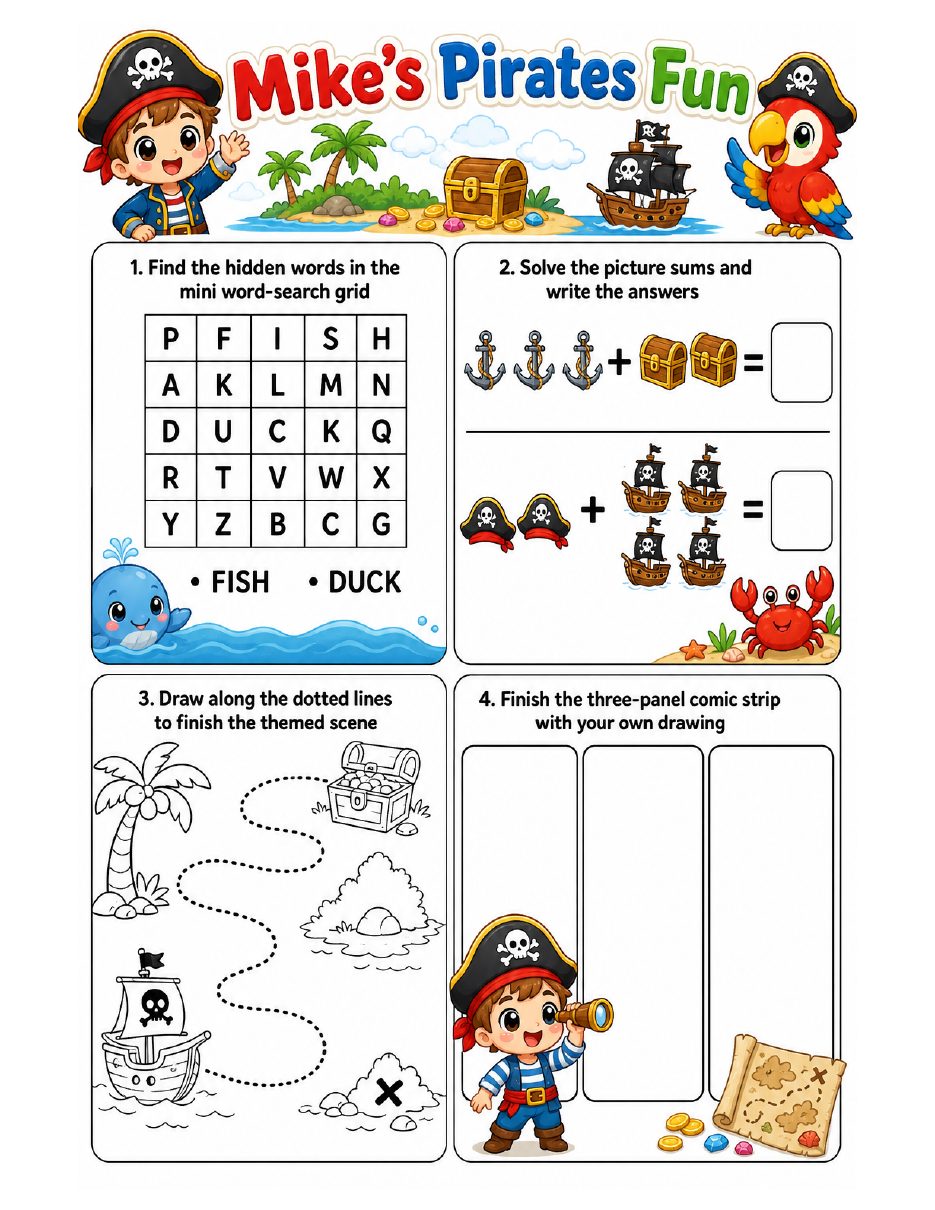
A peek at real pages
Print worksheets with their name on them
Pick a name, the age band, a theme and a learning focus, and we will build a kindergarten book around it.