Homeschool activities
Homeschool activities built around one learner
Home educators do not need another 300-page bundle. You need the right ten pages for this child, this week, on the topic they are into. MamaPony generates exactly that.
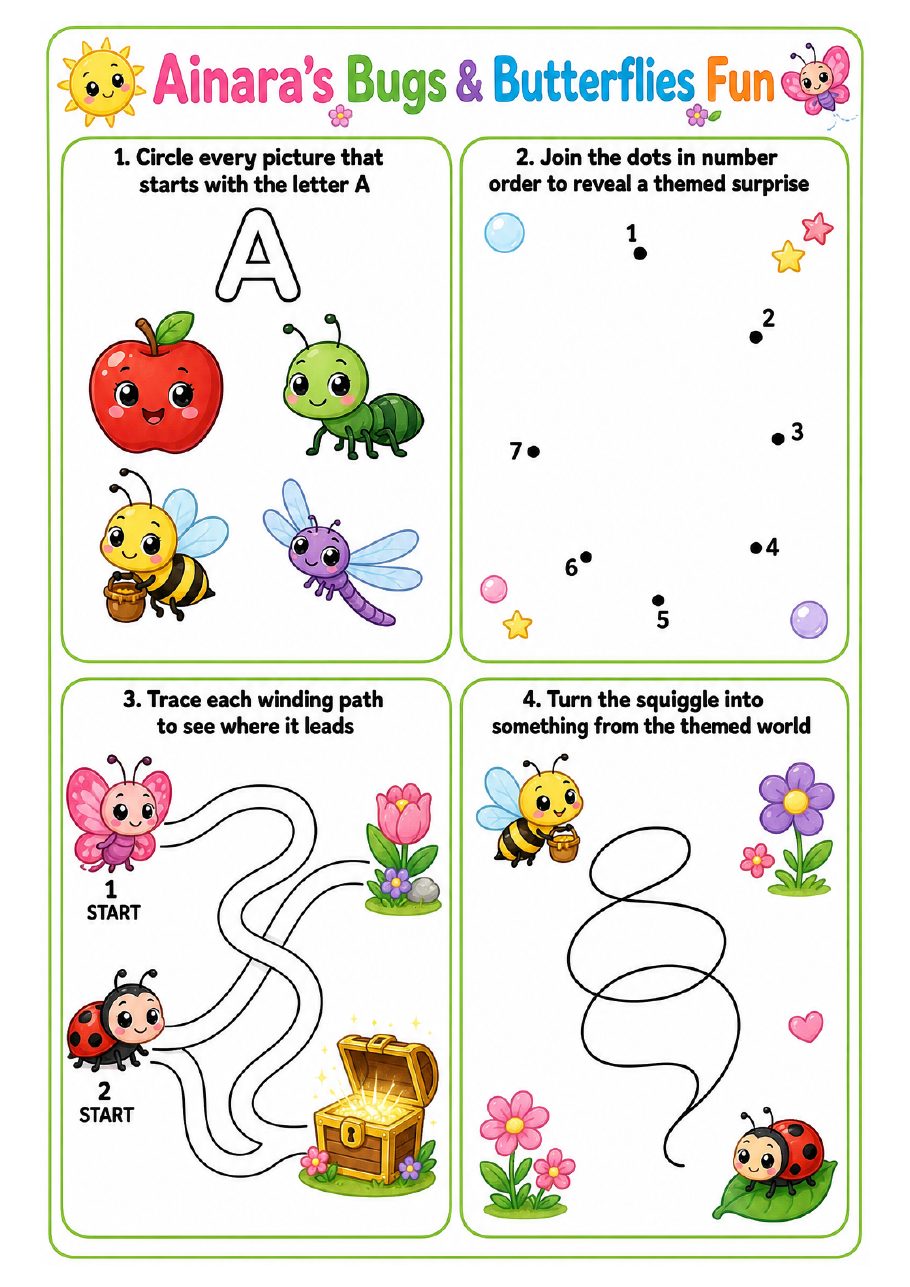
Fits a home-learning week, not a school timetable
One of the advantages of home education is following interest. If your seven-year-old is deep into volcanoes, oceans or knights this fortnight, you can make the practice pages match instead of arguing your way through unrelated worksheets.
A MamaPony pack is 10 pages with 30+ activities, which is roughly a week of short table sessions or one long, contented afternoon. You pick the child's name, age band, theme and learning focus, and the whole pack is drawn to fit.
- Around 58 themes, so the pack can follow whatever your current unit is.
- Four age bands from 2–3 to 8–10, useful when you are teaching siblings at different stages.
- Five learning focuses, so you can target the subject you are actually working on.
- Print-ready PDF, so you can print a page a day or the whole pack at once.
Targeting the subject you are on
Choose language and reading and the majority of pages work on letters, sounds, word building, spelling patterns and story prompts. Choose numbers and thinking for counting, sums, times tables, logic grids and picture sudoku. Pencil and hand skills gives you tracing, cutting and careful drawing; creativity and imagination gives you drawing prompts, story starters and colour-in scenes.
Balanced mix is useful for a review week, a travel week, or a stretch when you want the table time to feel light but still count for something.
Teaching more than one child
Generate a separate book per child, each with their own name and age band. Keeping the same theme across two books is a neat trick: a four-year-old and an eight-year-old can work side by side on ocean pages at genuinely different difficulty levels, with the same conversation happening across the table.
The certificate at the end gives you a natural stopping point and something to file in a portfolio — useful if you keep records of work covered.
Correctness, because you are the teacher
Every page that has an answer is generated from fixed content first: the count, the letter, the sorting groups, the sequence, the maze route. The artwork is then drawn to match, and each page is reviewed against that content before it reaches your library. Mazes must be solvable, counts must agree with the picture, tracing pages must not arrive already completed.
That check matters more in a homeschool setting than anywhere else — a wrong worksheet costs you the lesson, not just five minutes.
Pairs well with
- Montessori-inspired activities for kids for hands-on sorting, sequencing and cut-and-place work.
- Personalised kindergarten worksheets for the early letters, sounds and number-writing stage.
- Screen-free activities for kids for co-op days, travel and afternoons off the table.
Questions parents ask
A peek at real pages
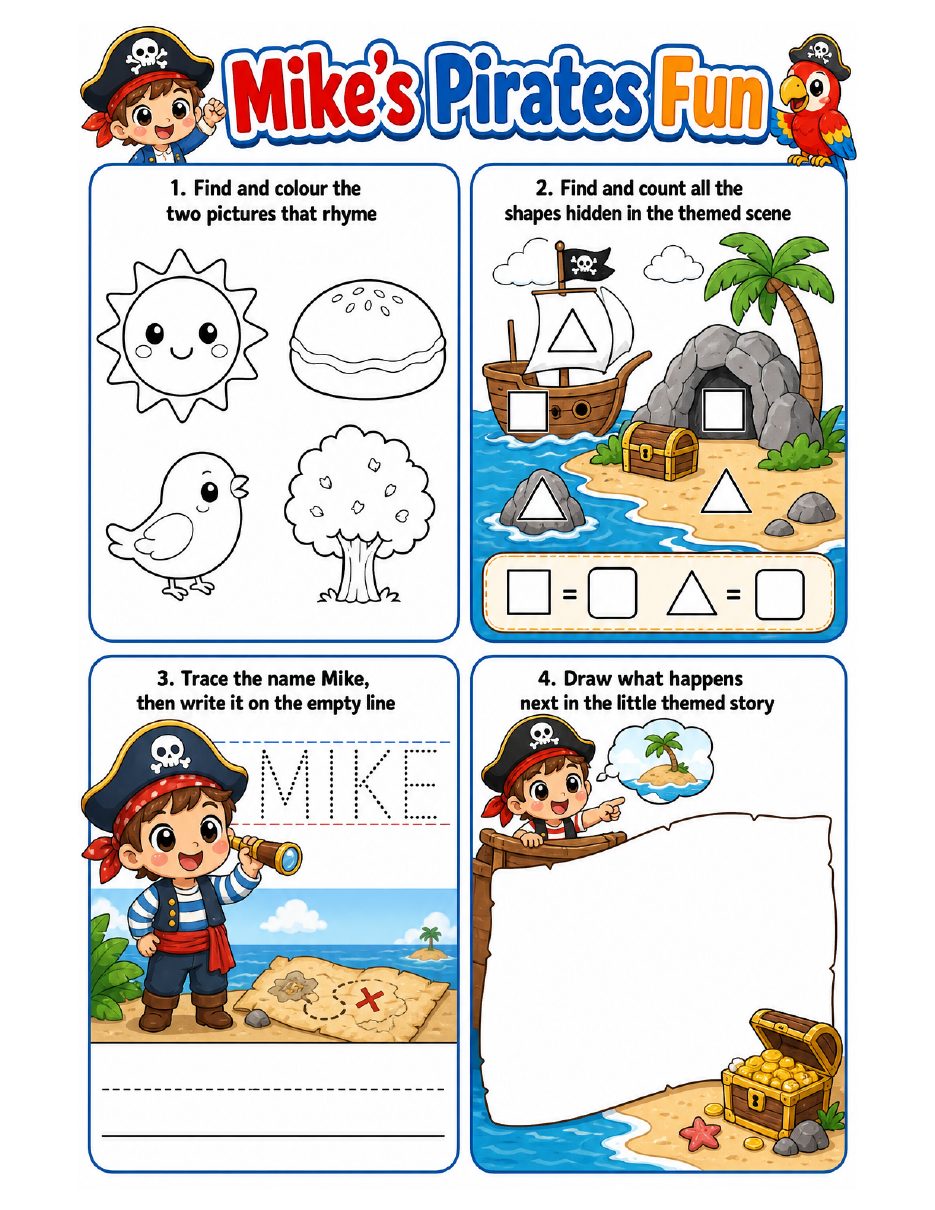
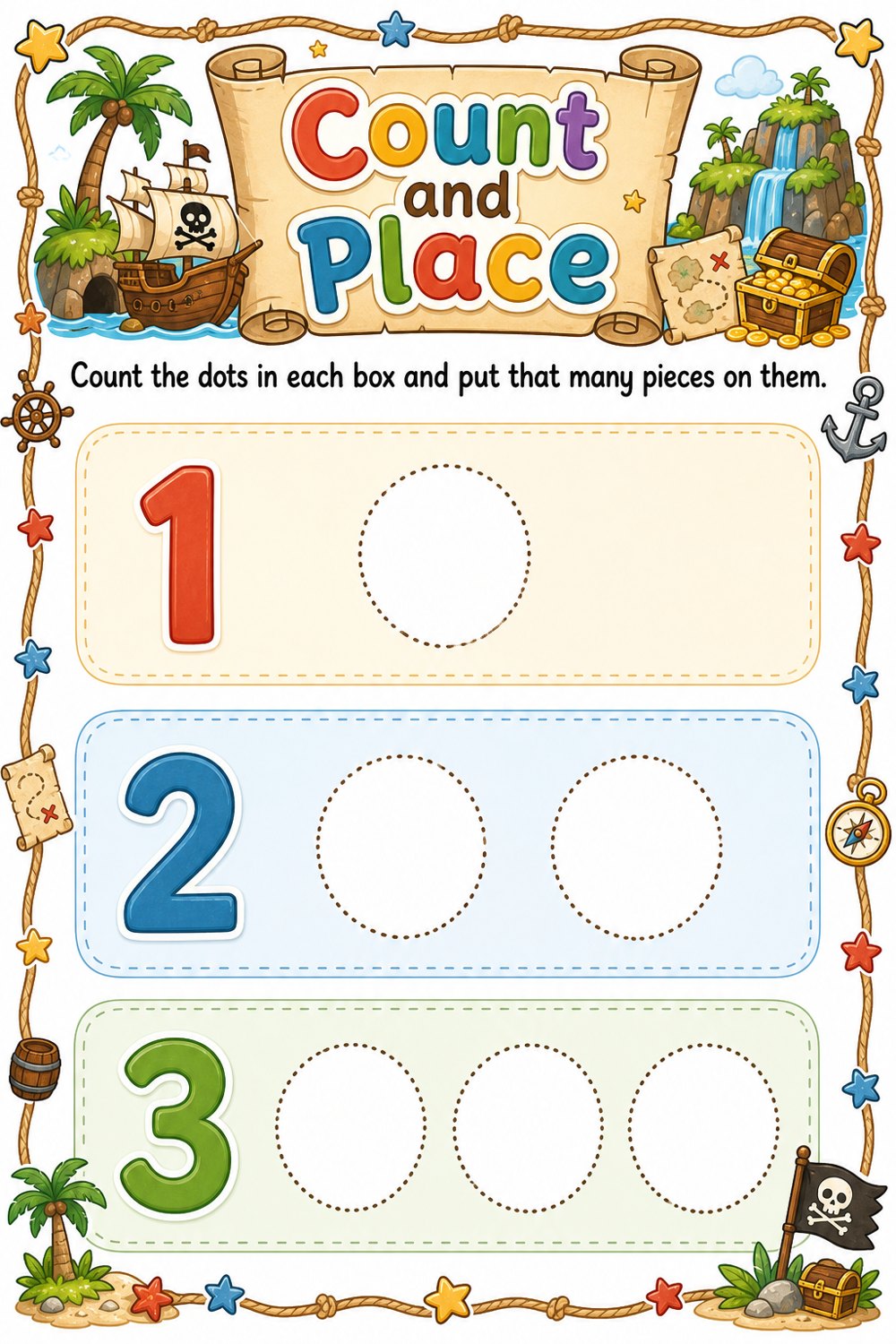
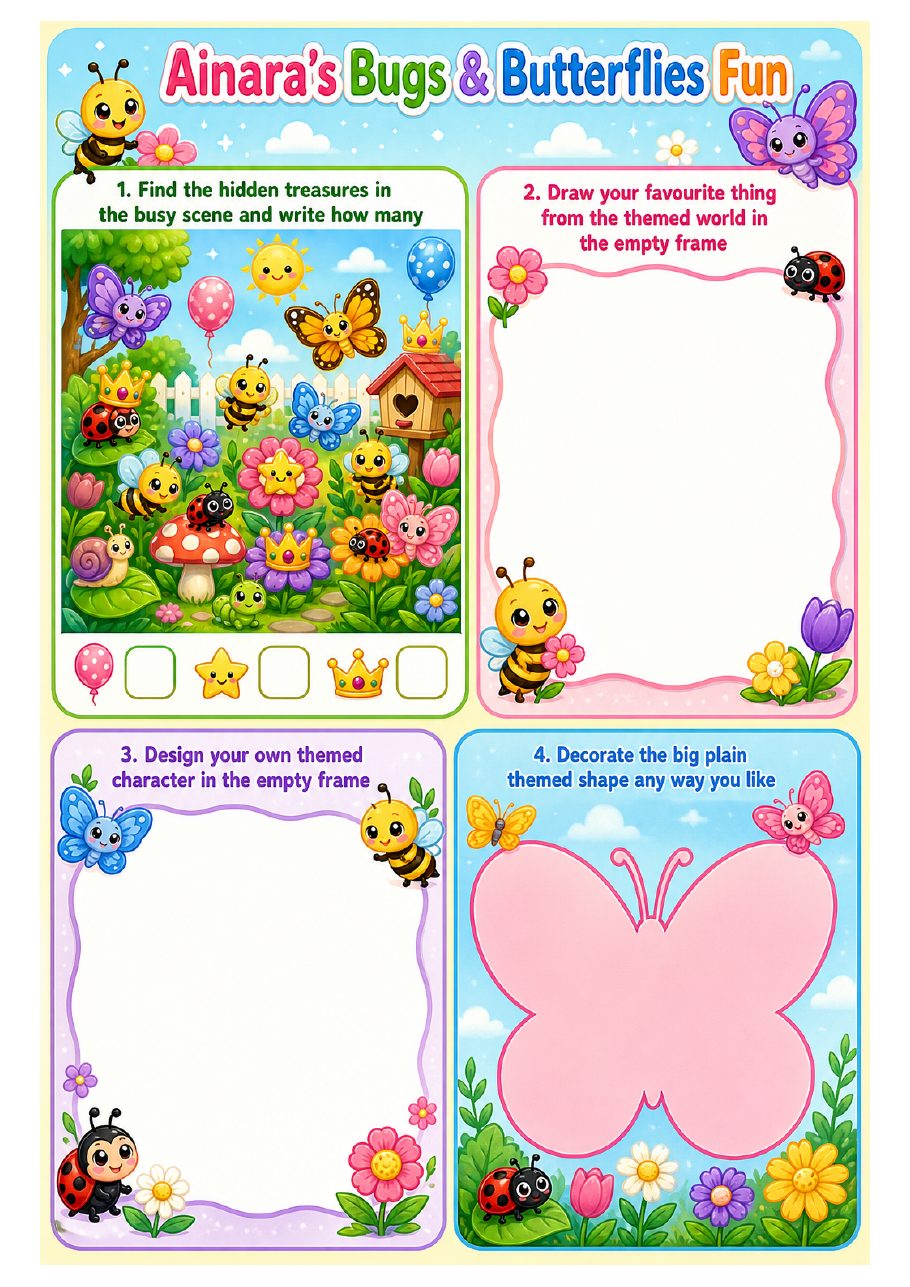
Build this week's pack around what they are into
Choose the child, the age band, the theme you are studying and the focus you want to practise.